
Minnesota secures additional $2.5 million payment from JUUL in wake of FDA authorization
Attorney General’s 2023 settlement required JUUL to make the payment upon receiving FDA authorization; funds will support efforts to curb underage tobacco & nicotine use in Minnesota
Including today’s payment, JUUL and Altria have paid $41.75 million to Minnesota so far
August 18, 2025 (SAINT PAUL) — Minnesota Attorney General Keith Ellison today announced that Minnesota has received an additional $2.5 million payment from e-cigarette maker JUUL as a result of the Attorney General’s settlement with the company, which required JUUL to make the payment following the FDA’s authorization of certain JUUL products. This comes in addition to $58 million in combined settlement payments from JUUL and its former parent company Altria, which was reached after Minnesota’s three-week trial against the companies in March and April 2023 for unlawful and deceptive marketing practices.
"Minnesota was making tremendous gains in the fight against nicotine use among young people until JUUL and Altria deceived and addicted a whole new generation of kids,” said Attorney General Ellison. “These companies did real harm to kids across Minnesota, which is why I took them to court and won a settlement that will help repair the damage that JUUL and Altria have caused. I hope this additional payment serves as a reminder that I will not tolerate the marketing of nicotine products to young people in Minnesota.”
Under the terms of the Consent Judgment, JUUL agreed to pay $2.5 million to Minnesota after achieving FDA marketing authorization. Consistent with the Attorney General’s settlement, the FDA only authorized the marketing and sale of JUUL products with tobacco or menthol flavors, and imposed additional reporting, recordkeeping, and marketing restrictions on JUUL—which are required by the Minnesota settlement.
Marketing authorization marks an important step in JUUL’s compliance with Minnesota’s settlement, which requires JUUL to abide by substantial conduct restrictions, including:
- Prohibiting JUUL from marketing and selling to children and young adults, including use of models under the age of 35, advertising on apparel, entertainment, and social media platforms, and the sale of flavored products;
- Restricting JUUL’s ability to sponsor events and use outdoor advertising in Minnesota;
- Preventing JUUL from distributing product samples;
- Requiring that JUUL accurately disclose the nicotine content of JUUL products;
- Directing how JUUL products may be sold in-store and limiting online sales; and
- Creating a retailer compliance program for Minnesota stores to ensure that JUUL products are being sold with proper age verification.
According to the FDA’s announcement of JUUL’s marketing authorization: “While today’s actions permit these specific e-cigarette products to be legally marketed in the U.S. to adults 21 and older, it does not mean these tobacco products are safe, nor are they ‘FDA approved.’ There is no safe tobacco product. Those who do not currently use tobacco products should not start. Youth should never use tobacco products.”
To date, the FDA has only authorized 39 e-cigarette products for marketing and sale. The FDA has made clear that “these are the only e-cigarette products that currently may be lawfully marketed and sold in the U.S.”
About the litigation
In December 2019, Attorney General Ellison sued JUUL on behalf of the people of Minnesota for violating Minnesota’s consumer-protection laws, breaching its duty of reasonable care, and creating a public nuisance.
The State’s 2019 lawsuit detailed how JUUL developed sleek devices and flavors that were appealing to youth, and how JUUL’s youth-oriented marketing deceptively attracted and addicted young people. In 2020, Minnesota amended its complaint to include Altria as a defendant: in 2018, Altria spent $12.8 billion to acquire a 35% share in JUUL.
Of the many state and local governments that sued JUUL or Altria, Minnesota was the first to go to trial. The trial began on March 28, 2023, as Attorney General Ellison delivered the first part of the State’s opening statement. The State presented 11 witnesses in support of its claims against JUUL and Altria before Attorney General Ellison rested the State’s case on April 11, 2023. The parties reached a settlement on April 17, 2023.
Under the terms of the Consent Judgment, JUUL and Altria will together pay a total of $60.5 million to the State of Minnesota over an eight-year period. With the frontloaded payment schedule and the payment announced today, JUUL and Altria will have paid $41.75 million under the settlement, meaning that the State has received nearly 70% of the total value of the settlement. Even after costs and fees, the value of Minnesota’s settlement was the largest per capita in the country. Due to legislation supported by Attorney General Ellison, Minnesota’s recovery from the case is placed into a special fund administered by the Minnesota Department of Health dedicated to the prevention of youth smoking and e-cigarette use.
The settlement also imposes substantial conduct restrictions on JUUL and Altria, and requires the companies to publish their internal documents related to the litigation in a public document depository.
The JUUL litigation followed Minnesota’s landmark lawsuit against Big Tobacco in 1994, which accused the industry of lying about the addictiveness of cigarettes and purposely marketing to kids in an effort to create lifelong tobacco users. After years of litigation and a months-long trial in 1998, Minnesota reached a settlement with the largest tobacco manufacturers that restricted the manufacturers’ marketing of tobacco products, required publication of internal industry documents, and mandated annual payments to Minnesota totaling $6.5 billion.
Settlements with the tobacco industry are widely recognized as landmark public health achievements. Since 1998, overall cigarette use has declined by more than 50%, and cigarette use among high school students dropped from over 35% in 1997 to 1.4% in 2024.
Protecting Minnesotans from illegal tobacco products
On August 29, 2024, Attorney General Ellison sent a letter to more than 5,000 tobacco distributors and retailers, asking them to stop distributing, marketing, and selling unauthorized and illegal flavored tobacco products in Minnesota. The letter warned that the sale of distribution of unauthorized and illegal tobacco products may violate several Minnesota laws, including consumer protection laws and a new deceptive vapor law that prohibits the advertising, sale, or distribution of e-cigarettes that are described or depicted as imitating candy, desserts, or beverages that are commonly marketed to minors, that imitate school supplies, or that are based on or describe characters that appeal to minors.
In January 2025, the Attorney General subsequently announced an investigation of e-cigarette manufacturer Loon and a lawsuit against High Light Vapes, a maker of e-cigarette products that mimic highlighters and are designed to be easily concealable and usable by school-age children.
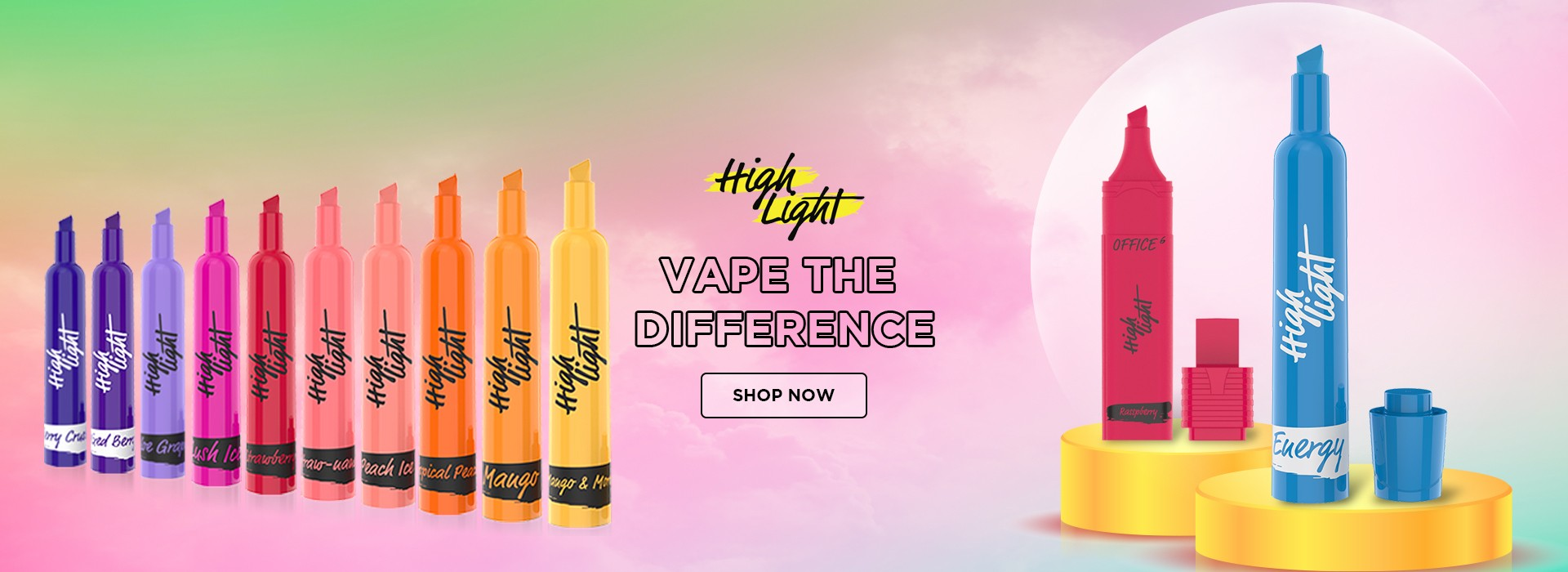
A promotional photo for High Light Vapes, which illustrates how closely they mimic highlighters
The Attorney General resolved the lawsuit against High Light Vapes in April 2025, winning a court order banning the company from doing business in Minnesota.
The Attorney General invites both industry and the public to report any instances of the marketing or sale of potential illegal e-cigarette or other tobacco products in Minnesota to the Attorney General’s Office in one of two ways: by emailing vaping@ag.state.mn.us or by completing the Illegal Vaping Products report form on the Attorney General’s website. These reports will help the Attorney General’s Office effectively monitor Minnesota’s marketplace and ensure businesses comply with Minnesota law.
Free help quitting nicotine
People looking to quit nicotine are not alone. Free nicotine-cessation help is available to all Minnesotans.
For teens, the My Life, My Quit program offers free and confidential help to Minnesotans ages 13 to 17 trying to quit commercial tobacco and nicotine. Teens can text, call or chat online with a quit coach, and receive age-specific materials. Teens can text “Start My Quit” to 36072 or visit https://mn.mylifemyquit.org/en-us/.
For adults, Quit Partner is Minnesota’s family of programs for people who want to quit. It offers coaching calls, text and email support, as well as medication like nicotine patches, gum, or lozenges. Call 1-800-QUIT-NOW (784-8669) or visit https://quitpartnermn.com/.